Tuesday, 25 February 2014

"LETS JAIL THE HOMOSEXUALS"SHOULD CHRISTIANS OR SELF CLAIMING BE THE FIRST TO THROW STONES


           Heterosexual Christians are being unbiblical by using the clobber passages as justification for applying absolute standards of morality to homosexual “sins” that they themselves are not tempted to commit, while at the same time accepting for themselves a standard of relative morality for those sins listed in the clobber passages that they do routinely commit.

The past ostracization and consequent merciless killings of purported gay community witnessed in Nigeria and Uganda questions whether we are fighting gay-ism or gay people.African countries have turned the critical issue into a political battle with the 'West' excuse. How are we to reconcile our christian beliefs, majority practices, obedience to rule of law and mostly the Fellowship of the Ten Commandments.But I ask should Christians be the first to throw stones and criminalize LGBT soceity?
Reconciling the Bible with unqualified acceptance and equality for LGBT people does not necessitate discounting, recasting, or deconstructing the Bible. All it takes is reading those passages of the Bible wherein homosexuality is mentioned with the same care that we would any other passage of the book.
Homosexuality is briefly mentioned in only six or seven of the Bible’s 31,173 verses. (The verses wherein homosexuality is mentioned are commonly known as the “clobber passages,” since they are typically used by Christians to “clobber” LGBT people.) The fact that homosexuality is so rarely mentioned in the Bible should be an indication to us of the lack of importance ascribed it by the authors of the Bible.
          Woe to you, teachers of the law and Pharisees, you hypocrites! You give a tenth of your spices—mint, dill and cumin. But you have neglected the more important matters of the law—justice, mercy and faithfulness. You should have practiced the latter, without neglecting the former. You blind guides! You strain out a gnat but swallow a camel. — Matthew 23: 23-24
 A fundamental tenet of Christianity is that we are all born sinners, that we have no choice but to exist in relationship to our sinful natures. And so Christians accept as inevitable that any given Christian will, for instance, on occasion drink too much, lust, or tell a lie.
Even a sin as heinous as murder we do not judge without first taking into account the context in which it occurred. Self-defense, protection of the innocent, during a war—we recognize that there are times when taking the life of another is not only not a sin, but a morally justified and even heroic act.
Christians evaluate the degree of sin, or even whether or not a real sin has occurred, by looking at both the harm caused by the sin, and the intent of the sin’s perpetrator.
They do, that is, for all sins except homosexuality.
Heterosexual Christians are being unfair and hypocritical by using the clobber passages as justification for applying absolute standards of morality (and an absolute penalty) to homosexual “sins” that they themselves are never tempted to commit, while at the same time accepting for themselves a standard of relative morality (and applying no real penalty) for those sins listed in the clobber passages that they do routinely commit.What of rules like ;if the parents of a new bride could not, upon her husband’s request, prove that she was a virgin, that bride would have to be stoned to death. Christians would also have to stone to death any Christian guilty of adultery.

        Or do you not know that wrongdoers will not inherit the kingdom of God? Do not be deceived: Neither the sexually immoral nor idolaters nor adulterers nor men who have sex with men nor thieves nor the greedy nor drunkards nor slanderers nor swindlers will inherit the kingdom of God. — 1 Corinthians 6:9-10

Being personally repelled by homosexual sex doesn’t make homosexual sex a sin.
In addition to the Bible, many Christians cite as evidence of the inherent sinfulness of homosexual acts their own emotional response to such acts. It is understandable that many straight people find homosexual sex repugnant (just as many gay people find heterosexual sex repugnant). It is normal for any one of us to be viscerally repelled by the idea of sex between, or with, people for whom we personally have no sexual attraction. Young people, for example, are often disgusted by the thought of senior citizens having sex. And who isn’t repulsed by the idea of their own parents having sex? (When, rationally speaking, we should rejoice in the fact that they did—at least once!) But it is much too easy for any person to mistake their instinctive reaction against something as a moral reaction to that thing. Outrage isn’t always moral outrage, though the two usually feel the same.


Just because someone sins different from you doesn't make you better.I might disagree with what you say and how you live,but I will always defend your right of speech and that to live.

For clarity and justification I'm a straight person in a relationship.But I would defend another man's right to live even if I disagree by the means by which he lives.

Research also from the NALT CHRISTIAN PROJECT.

Friday, 21 February 2014

Facebook $19bn Dollar acquisition of Whatsapp;Worth it?


Hmmm,okay $19billion is like 1.6 Trillion Kenya Shillings.Yeah as huge as our National budget.This means whatsapp could just ride our annual economy.Anyway I'm just noting that to show what technological inventions can do.

Recently I covered an article about a possible demise of facebook from the high status of social networking it enjoys.Zuckeberg seems to have overreacted,though in a surprisingly greater move.Is it true that messaging apps are now taking over

"The deal marks the coming-of-age of messaging apps, which let people send text messages and share photos and other stuff without incurring charges from telecoms firms. WhatsApp is free to use for 12 months and then costs a mere 99 cents a year. Plenty of other such apps have sprung up, including Viber, which Rakuten, a Japanese internet giant, recently bought for $900m, and the immensely popular WeChat, which belongs to Tencent, an innovative Chinese company."says The Economist.

Within five of four years of its inception,Whatsapp has reached 450 million users with an active 72% online users.This is a higher rise even more than facebook.
Whatsapp now adds a million users a day.
"But does the whopping price tag for WhatsApp make sense? Assuming it keeps adding users at its current rate of 1m a day—and they end up paying for its service—it could generate hundreds of millions of dollars of revenue. Twitter, which reported $665m of revenue last year, has a market capitalisation of $30 billion. Much will depend on how well Mr Zuckerberg gets on with Jan Koum, the boss of WhatsApp, who is joining Facebook’s board and will run the app as an independent business. Mr Koum, who has a well-known aversion to collecting people’s data and plastering advertising over his app, seems an odd bedfellow for Facebook. But the deal was clearly one that he couldn’t refuse."The Economist 

Tuesday, 28 January 2014

FACEBOOK DECLINE;WHY YOUTHS ARE ABANDONING THE GIANT OF SOCIAL SITES

Cavin Ouma;
Fourth Year Student Multimedia University of Kenya.
BSC Mathematics(Major Applied Mathematics) and Computer  Science;
CISCO N+,Computer Applications,Blogger,Freelance ICT Journalist;

When I came across this article from Princeton University written by John Cannarella and Joshua Spechler of the Department of Mechanical and Aerospace Engineering,I couldn't amaze at how they captured my thoughts and worry exactly.
A friend of mine great computer scientist from Kenyatta University asked me earlier to do a research on future dominance of facebook,I did all the research but I realized those had been the same arguments other social sites which so far have now deteriorated hard.
The study uses standard epidemiological models dealing with disease lifespans and dynamics. By simply going to ‘Google Trends’ for freely available search statistics, Cannarella and Spechler are able to make a diagram of the different phases a social networking site goes through, which very closely match that of a disease e.g. ‘adoption’, ‘abandonment’ phases.
The researchers first used the number of search queries for MySpace, a similar popular site which experienced a steep rise and an even steeper decline. An updated version of their formula, including the phases, was then applied to Facebook.
Epidemiological modeling of online social network dynamics, John Cannarella, Joshua A. Spechler Department of Mechanical and Aerospace Engineering, Princeton University, Princeton, NJ, USA Facebook reignited a new from of socialization.The satisfaction that people get from logging into social sites should be a relaxation from their normal life.That's what facebook used to be at the peak of 2010.A daily job,then finally in the evening while in traffic,one updates how his or her day was.But with upsurge of users have come a transfer of the normal life to facebook.A new form of usage where everyone from employer to employee are users and have mutual friends;The boss can view the updates of employees and privacy is now of great concerns.

We had been the younger age that was so enthusiastic about facebook,but after six years of usage now and only twenty one years of age I already feel the pressure not to deactivate my account(who knows) but maybe leave it domant there for a while:testing waters.In the meantime I'm using whatsapp ,twitter linkedin,skilpages,gtalk,to keep in touch avoiding the facebook 'overpopulation'.

I agree with the Princeton minds and as some would argue we are only mathematicians and not sociologists or psychologists,they must remember that facebook was also created by not a psychologist nor sociologist.
Every three out of five users who were my friends in 2009 have now gone dormant.They have not deactivated their accounts but rather resorted to non-firsthand socialization,where they avoid logging in and only do so when it is necessary,maybe talk to a relative(since all relatives are nowadays facebook users).In fact soon we are seeing families forming groups and pages;'The Ouma family open group',It will not be a surprise.Its human nature.

The integration of many apps both mobile and PC within Facebook environment  has made privacy an issue of concern.The photos you upload can be seen by all mutual friend of your friend who comments or likes it.The Graph search has even made it easier for any relative who wants to peruse your profile to find you.This is what the youths are running away from.

The Applied Mathematics used in determination of such trends involve approximation theory (broadly construed, to include representations, asymptotic methods, variational methods, and numerical analysis); and applied probability.

The West trend is likely to be mirrored in other countries .

Research also from http://rt.com/news/facebook-disease-die-decline-083/
            http://www.nation.co.ke/news/Death-of-Facebook-predicted-as-more-youngsters-log-out/

Wednesday, 22 January 2014

ONE FOR THE ROAD


The spirit of brotherhood and sisterhood Campus style;
May 2012,Multimedia University had organized a” Welcome Back” party for those of us who had spent way almost five months in the name of long holiday. Not a fan of these Campus organized parties due to familiarity of faces I had declined to go.
Circumstances would turn good when my friend from Meru University arrived late in the evening and said why not.We arrived at Kiss50 club Rongai around 11 pm. The energy was contagious and the place was so full. Well I came to enjoy myself,” Waiter!, Bring  one Napoleon and Two Guinness ,”I ordered. Well that added to what my friend and his girlfriend hard ordered would surely” Fill the table” as clubbers like to call it. We would let the Freshers take the floor and sweat ,Oh I already had done that in my first year, when you would only buy one 300ml soda and dance with it till morning.

The joy and party mood that comes with sharing a table with friends is you’ll never run dry. I mean not in your pockets but the bottles. By 1 AM I already had outdone my Napoleon and made a great football manager out of the Guinness’s. I stood up to do my normal Drunkard exercise :Stand on one leg, to see if I was still energetic (at least enough for another spree). Wow my energy was even surprising me. My friend had already gone to hit the dance floor with his ‘Chiquita’ ,poor single I.  I went to the back of the club; well this place is an open air and so relaxed from the indoor .And there was ‘Simba’ this tall friend of mine.”Wagwasi!”as he used to call me, he shouted”kuja pewa yako,“:’come take yours’.I had joined the table and two more pilsner ice were staring at me. This was going to be  a night and a half.
By now I didn’t have to test my strength again. Looking at the adjacent table, and there seated was the VC,I mean Vice Chairman.I insisted ‘Ozero must buy alcohol”. Then memories became invivid ,a little of my friend carrying me to lie on the chair, some guys borrowing me money to refund. One friend for the road, My friend from the land of miraa came and dragged me to a taxi.

I woke up around noon the next day. The walk of shame, the puke on my clothes, the mud could tell it all. I look at that day as the day I would have ended. 
University is fun, have the fun as long as you know you have those friends watching your back.If he is willing to buy you a drink or two,he must be ready to carry you back to safety when your body demands.

When I hear of fellow comrades from Kenyatta University dying in unclear circumstances while raving at Thika and adjacent clubs. It saddens me. Always have that one friend for the road, that who’ll slap some sense into you as you enter the big tyred cars of strangers .Be a one for the road for a friend of yours. Comrades must take care of each other. I personally don’t know how I would break news of a friend’s demise while we went raving with him. I urge you not to be a brother’s keeper but a BROTHER’S MAKER.

Tuesday, 10 December 2013

Barack Obama's Powerful and Touching Tribute To Nelson Mandela;His best speech.


Barack Obama Mandela memorialBARRACK OBAMA'S TOUCHING SPEECH ;
"To Graça Machel and the Mandela family; to President Zuma and members of the government; to heads of state and government, past and present; distinguished guests - it is a singular honor to be with you today, to celebrate a life unlike any other.  To the people of South Africa - people of every race and walk of life - the world thanks you for sharing Nelson Mandela with us.  His struggle was your struggle.  His triumph was your triumph.  Your dignity and hope found expression in his life, and your freedom, your democracy is his cherished legacy. 
It is hard to eulogize any man - to capture in words not just the facts and the dates that make a life, but the essential truth of a person - their private joys and sorrows; the quiet moments and unique qualities that illuminate someone’s soul.  How much harder to do so for a giant of history, who moved a nation toward justice, and in the process moved billions around the world.
Born during World War I, far from the corridors of power, a boy raised herding cattle and tutored by elders of his Thembu tribe - Madiba would emerge as the last great liberator of the 20th century.  Like Gandhi, he would lead a resistance movement - a movement that at its start held little prospect of success.  Like King, he would give potent voice to the claims of the oppressed, and the moral necessity of racial justice.  He would endure a brutal imprisonment that began in the time of Kennedy and Khrushchev, and reached the final days of the Cold War.  Emerging from prison, without force of arms, he would - like Lincoln - hold his country together when it threatened to break apart.  Like America’s founding fathers, he would erect a constitutional order to preserve freedom for future generations - a commitment to democracy and rule of law ratified not only by his election, but by his willingness to step down from power.
Given the sweep of his life, and the adoration that he so rightly earned, it is tempting then to remember Nelson Mandela as an icon, smiling and serene, detached from the tawdry affairs of lesser men.  But Madiba himself strongly resisted such a lifeless portrait. Instead, he insisted on sharing with us his doubts and fears; his miscalculations along with his victories.  “I’m not a saint,” he said, “unless you think of a saint as a sinner who keeps on trying.”
It was precisely because he could admit to imperfection - because he could be so full of good humor, even mischief, despite the heavy burdens he carried - that we loved him so.  He was not a bust made of marble; he was a man of flesh and blood - a son and husband, a father and a friend.  That is why we learned so much from him; that is why we can learn from him still.  For nothing he achieved was inevitable.  In the arc of his life, we see a man who earned his place in history through struggle and shrewdness; persistence and faith.  He tells us what’s possible not just in the pages of dusty history books, but in our own lives as well.
Mandela showed us the power of action; of taking risks on behalf of our ideals.  Perhaps Madiba was right that he inherited, “a proud rebelliousness, a stubborn sense of fairness” from his father. Certainly he shared with millions of black and colored South Africans the anger born of, “a thousand slights, a thousand indignities, a thousand unremembered moments…a desire to fight the system that imprisoned my people.”
But like other early giants of the ANC - the Sisulus and Tambos - Madiba disciplined his anger; and channeled his desire to fight into organization, and platforms, and strategies for action, so men and women could stand-up for their dignity.  Moreover, he accepted the consequences of his actions, knowing that standing up to powerful interests and injustice carries a price.  “I have fought against white domination and I have fought against black domination,” he said at his 1964 trial.  “I’ve cherished the ideal of a democratic and free society in which all persons live together in harmony and with equal opportunities.  It is an ideal which I hope to live for and to achieve.  But if needs be, it is an ideal for which I am prepared to die.”
Mandela taught us the power of action, but also ideas; the importance of reason and arguments; the need to study not only those you agree with, but those who you don’t.  He understood that ideas cannot be contained by prison walls, or extinguished by a sniper’s bullet.  He turned his trial into an indictment of apartheid because of his eloquence and passion, but also his training as an advocate. He used decades in prison to sharpen his arguments, but also to spread his thirst for knowledge to others in the movement.  And he learned the language and customs of his oppressor so that one day he might better convey to them how their own freedom depended upon his.
Mandela demonstrated that action and ideas are not enough; no matter how right, they must be chiseled into laws and institutions.  He was practical, testing his beliefs against the hard surface of circumstance and history.  On core principles he was unyielding, which is why he could rebuff offers of conditional release, reminding the Apartheid regime that, “prisoners cannot enter into contracts.”  But as he showed in painstaking negotiations to transfer power and draft new laws, he was not afraid to compromise for the sake of a larger goal.  And because he was not only a leader of a movement, but a skillful politician, the Constitution that emerged was worthy of this multiracial democracy; true to his vision of laws that protect minority as well as majority rights, and the precious freedoms of every South African.
Finally, Mandela understood the ties that bind the human spirit.  There is a word in South Africa- Ubuntu - that describes his greatest gift: his recognition that we are all bound together in ways that can be invisible to the eye; that there is a oneness to humanity; that we achieve ourselves by sharing ourselves with others, and caring for those around us.  We can never know how much of this was innate in him, or how much of was shaped and burnished in a dark, solitary cell.  But we remember the gestures, large and small - introducing his jailors as honored guests at his inauguration; taking the pitch in a Springbok uniform; turning his family’s heartbreak into a call to confront HIV/AIDS - that revealed the depth of his empathy and understanding.  He not only embodied Ubuntu; he taught millions to find that truth within themselves.  It took a man like Madiba to free not just the prisoner, but the jailor as well; to show that you must trust others so that they may trust you; to teach that reconciliation is not a matter of ignoring a cruel past, but a means of confronting it with inclusion, generosity and truth. He changed laws, but also hearts.
For the people of South Africa, for those he inspired around the globe - Madiba’s passing is rightly a time of mourning, and a time to celebrate his heroic life.  But I believe it should also prompt in each of us a time for self-reflection. With honesty, regardless of our station or circumstance, we must ask:  how well have I applied his lessons in my own life?
It is a question I ask myself - as a man and as a President.  We know that like South Africa, the United States had to overcome centuries of racial subjugation.  As was true here, it took the sacrifice of countless people - known and unknown - to see the dawn of a new day.  Michelle and I are the beneficiaries of that struggle.  But in America and South Africa, and countries around the globe, we cannot allow our progress to cloud the fact that our work is not done.  The struggles that follow the victory of formal equality and universal franchise may not be as filled with drama and moral clarity as those that came before, but they are no less important.  For around the world today, we still see children suffering from hunger, and disease; run-down schools, and few prospects for the future.  Around the world today, men and women are still imprisoned for their political beliefs; and are still persecuted for what they look like, or how they worship, or who they love.
We, too, must act on behalf of justice.  We, too, must act on behalf of peace.  There are too many of us who happily embrace Madiba’s legacy of racial reconciliation, but passionately resist even modest reforms that would challenge chronic poverty and growing inequality.  There are too many leaders who claim solidarity with Madiba’s struggle for freedom, but do not tolerate dissent from their own people.  And there are too many of us who stand on the sidelines, comfortable in complacency or cynicism when our voices must be heard.
The questions we face today - how to promote equality and justice; to uphold freedom and human rights; to end conflict and sectarian war - do not have easy answers.  But there were no easy answers in front of that child in Qunu.  Nelson Mandela reminds us that it always seems impossible until it is done.  South Africa shows us that is true.  South Africa shows us we can change.  We can choose to live in a world defined not by our differences, but by our common hopes.  We can choose a world defined not by conflict, but by peace and justice and opportunity. 
We will never see the likes of Nelson Mandela again.  But let me say to the young people of Africa, and young people around the world - you can make his life’s work your own.  Over thirty years ago, while still a student, I learned of Mandela and the struggles in this land.  It stirred something in me.  It woke me up to my responsibilities - to others, and to myself - and set me on an improbable journey that finds me here today.  And while I will always fall short of Madiba’s example, he makes me want to be better.  He speaks to what is best inside us.  After this great liberator is laid to rest; when we have returned to our cities and villages, and rejoined our daily routines, let us search then for his strength - for his largeness of spirit - somewhere inside ourselves.  And when the night grows dark, when injustice weighs heavy on our hearts, or our best laid plans seem beyond our reach - think of Madiba, and the words that brought him comfort within the four walls of a cell:
It matters not how strait the gate,
How charged with punishments the scroll,
I am the master of my fate:
I am the captain of my soul. 
What a great soul it was.  We will miss him deeply.  May God bless the memory of Nelson Mandela.  May God bless the people of South Africa."

No surprise He got the loudest applause from the crowd.When Barry speaks,he speaks in the peoples language touching the deepest points of hearts.

Research From
http://www.businessinsider.com/obama-nelson-mandela-memorial-service-speech-full-text-2013-12
http://www.theguardian.com/world/blog/2013/dec/10/nelson-mandelas-memorial-service-live-updates

Tuesday, 5 November 2013

The Google Glass;Pushing Techonology Further

Google Glass is launched to the public

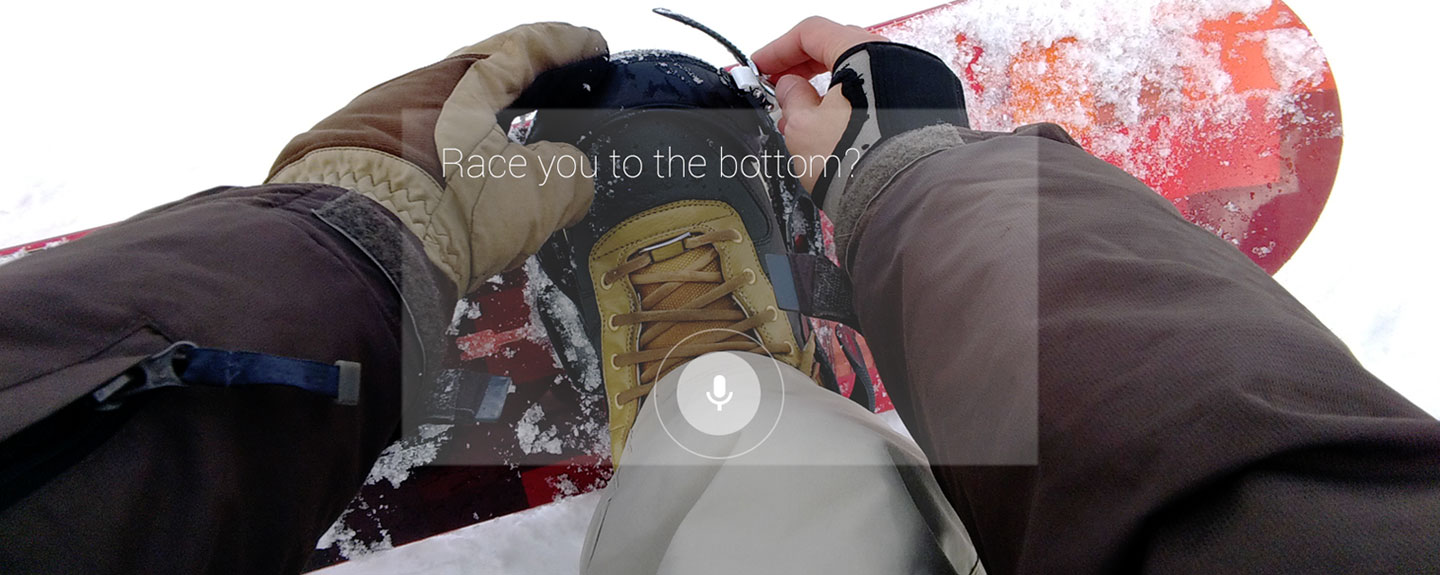
Google Glass is an augmented reality head-mounted display, allowing hands-free access to the web.* The product resembles normal eyeglasses where the lens is replaced by a small electronic screen. It provides interaction via natural language voice commands, as well as eye-tracking technology.* A miniature gyroscope can tell the user's position and orientation at all times. On the side frame is audio output, and a touch control pad, while on top is a button for recording photos and videos with a built-in camera. It is available to developers by 2013 and for the general public by 2014.* The design allows for integration of the display into people's day-to-day eyewear. It is light and weighs less than most sunglasses. A prototype unveiled in 2012 received criticism over the potential for Google to insert advertising (its main source of revenue) into the user's field of vision. However, the company denied it would use adverts.


google glass 2014

 And lets check out what the Google glass will do;

           
      Translate your voice

            
http://www.google.com/glass/start/assets/img/panels/bgs1440x575/navigation.jpg
               show you directions


    Just ask whatever is in your mind

http://www.google.com/glass/start/assets/img/panels/bgs1440x575/messaging.jpg                                    

Text via speech


http://www.google.com/glass/start/assets/img/panels/bgs1440x575/hangout.jpg
    Share what you see.Live   

And so many other coolest stuffs.

What's cool about technology is that it keeps on changing and you never know what craziest things the world will offer,but these Google Glasses will be totally off the hook;

I hope the CEO lands me one ....
Research from Google
                       http://www.google.com/glass/start/what-it-does/

Monday, 4 November 2013

The Future Motorcycles and Motorbikes

There is a saying that goes"A man is capable of his imaginations"And true if we can imagine it we can achieve it.Now I was looking at the craziest Future possibilities of advanced technologies and came out with this piece;

 The near future of motorcycles revolves around ones that run on hydrogen fuel cells, battery electric power and bio fuels. 


Future Motorcycle
Future Motorcycle

The Suzuki Crosscage fuel cell motorcycle (pictured above) is a hydrogen-powered prototype that exists now. Suzuki is putting the Crosscage through road testing with the goal of commercialization in less than 5 years.
Dodge Tomahawk
Dodge Tomahawk

So, let’s go back to the future a bit with this Dodge Tomahawk that was unveiled in 2003. Back then this was what the concept of future motorcycles would look like to the designers with its 500 hp Dodge Viper V10 engine. Even though this is a bit old school, it’s still too cool for school today.
Electric Motorcycle
Electric Motorcycle
Now, for new school, electric motorcycles are starting to come of age. For instance, this is the MotoCzysz E1pc, which is the world’s fastest electric motorbike. And no wonder due to the bank of batteries in the middle of the vehicle.
Motorcycle Concept
Motorcycle Concept

This is the A3W Motiv concept motorcycle by Julien Rondino. Besides the obvious three wheels in a row, it is made of aluminum and steel tubing plus a 999cc LC8 v-twin engine.

Wrath Motorcycle
Wrath Motorcycle
The Wrath concept by Alexander Barnard gives us a clue that future motorcycles 30 or so years from now can still go a bit old school with the chopper look.

Chopper Concept
Chopper Concept
Another future chopper concept motorcycle is the Swordfish by designer Alexander Kotlyarevsky. Style and power in one package. Can anyone say “road trip”?
Honda Future Motorcycle
The Honda Concept V4 motorcycle gives us an idea of what the future holds for this vehicle maker. By the time this hits the market, the term “Rice Burner” will have been long forgotten.
Tron Motorcycle
Tron Motorcycle
One day if we are all lucky enough we’ll be around to see future motorcycles such as this Tron light cycle prototype. My heart is racing now.

Research also from Future Motorcyles
Credits: Suzuki, Dodge, Alexander Barnard, Alexander Kotlyarevsky, Julien Rondino, Honda

And so we take a break from politics,I always say Africa is the craddle of next generation technology.I have imagined and so has Africa and we will build them.


FPL GAMEWEEK 27

I currently rank 175k a drop from the 145k rank on Gameweek 25. I owe my drop to captaining Aguero who gave me a return of 4 versus 28 by ...