Wednesday, 22 January 2014

ONE FOR THE ROAD


The spirit of brotherhood and sisterhood Campus style;
May 2012,Multimedia University had organized a” Welcome Back” party for those of us who had spent way almost five months in the name of long holiday. Not a fan of these Campus organized parties due to familiarity of faces I had declined to go.
Circumstances would turn good when my friend from Meru University arrived late in the evening and said why not.We arrived at Kiss50 club Rongai around 11 pm. The energy was contagious and the place was so full. Well I came to enjoy myself,” Waiter!, Bring  one Napoleon and Two Guinness ,”I ordered. Well that added to what my friend and his girlfriend hard ordered would surely” Fill the table” as clubbers like to call it. We would let the Freshers take the floor and sweat ,Oh I already had done that in my first year, when you would only buy one 300ml soda and dance with it till morning.

The joy and party mood that comes with sharing a table with friends is you’ll never run dry. I mean not in your pockets but the bottles. By 1 AM I already had outdone my Napoleon and made a great football manager out of the Guinness’s. I stood up to do my normal Drunkard exercise :Stand on one leg, to see if I was still energetic (at least enough for another spree). Wow my energy was even surprising me. My friend had already gone to hit the dance floor with his ‘Chiquita’ ,poor single I.  I went to the back of the club; well this place is an open air and so relaxed from the indoor .And there was ‘Simba’ this tall friend of mine.”Wagwasi!”as he used to call me, he shouted”kuja pewa yako,“:’come take yours’.I had joined the table and two more pilsner ice were staring at me. This was going to be  a night and a half.
By now I didn’t have to test my strength again. Looking at the adjacent table, and there seated was the VC,I mean Vice Chairman.I insisted ‘Ozero must buy alcohol”. Then memories became invivid ,a little of my friend carrying me to lie on the chair, some guys borrowing me money to refund. One friend for the road, My friend from the land of miraa came and dragged me to a taxi.

I woke up around noon the next day. The walk of shame, the puke on my clothes, the mud could tell it all. I look at that day as the day I would have ended. 
University is fun, have the fun as long as you know you have those friends watching your back.If he is willing to buy you a drink or two,he must be ready to carry you back to safety when your body demands.

When I hear of fellow comrades from Kenyatta University dying in unclear circumstances while raving at Thika and adjacent clubs. It saddens me. Always have that one friend for the road, that who’ll slap some sense into you as you enter the big tyred cars of strangers .Be a one for the road for a friend of yours. Comrades must take care of each other. I personally don’t know how I would break news of a friend’s demise while we went raving with him. I urge you not to be a brother’s keeper but a BROTHER’S MAKER.

Tuesday, 10 December 2013

Barack Obama's Powerful and Touching Tribute To Nelson Mandela;His best speech.


Barack Obama Mandela memorialBARRACK OBAMA'S TOUCHING SPEECH ;
"To Graça Machel and the Mandela family; to President Zuma and members of the government; to heads of state and government, past and present; distinguished guests - it is a singular honor to be with you today, to celebrate a life unlike any other.  To the people of South Africa - people of every race and walk of life - the world thanks you for sharing Nelson Mandela with us.  His struggle was your struggle.  His triumph was your triumph.  Your dignity and hope found expression in his life, and your freedom, your democracy is his cherished legacy. 
It is hard to eulogize any man - to capture in words not just the facts and the dates that make a life, but the essential truth of a person - their private joys and sorrows; the quiet moments and unique qualities that illuminate someone’s soul.  How much harder to do so for a giant of history, who moved a nation toward justice, and in the process moved billions around the world.
Born during World War I, far from the corridors of power, a boy raised herding cattle and tutored by elders of his Thembu tribe - Madiba would emerge as the last great liberator of the 20th century.  Like Gandhi, he would lead a resistance movement - a movement that at its start held little prospect of success.  Like King, he would give potent voice to the claims of the oppressed, and the moral necessity of racial justice.  He would endure a brutal imprisonment that began in the time of Kennedy and Khrushchev, and reached the final days of the Cold War.  Emerging from prison, without force of arms, he would - like Lincoln - hold his country together when it threatened to break apart.  Like America’s founding fathers, he would erect a constitutional order to preserve freedom for future generations - a commitment to democracy and rule of law ratified not only by his election, but by his willingness to step down from power.
Given the sweep of his life, and the adoration that he so rightly earned, it is tempting then to remember Nelson Mandela as an icon, smiling and serene, detached from the tawdry affairs of lesser men.  But Madiba himself strongly resisted such a lifeless portrait. Instead, he insisted on sharing with us his doubts and fears; his miscalculations along with his victories.  “I’m not a saint,” he said, “unless you think of a saint as a sinner who keeps on trying.”
It was precisely because he could admit to imperfection - because he could be so full of good humor, even mischief, despite the heavy burdens he carried - that we loved him so.  He was not a bust made of marble; he was a man of flesh and blood - a son and husband, a father and a friend.  That is why we learned so much from him; that is why we can learn from him still.  For nothing he achieved was inevitable.  In the arc of his life, we see a man who earned his place in history through struggle and shrewdness; persistence and faith.  He tells us what’s possible not just in the pages of dusty history books, but in our own lives as well.
Mandela showed us the power of action; of taking risks on behalf of our ideals.  Perhaps Madiba was right that he inherited, “a proud rebelliousness, a stubborn sense of fairness” from his father. Certainly he shared with millions of black and colored South Africans the anger born of, “a thousand slights, a thousand indignities, a thousand unremembered moments…a desire to fight the system that imprisoned my people.”
But like other early giants of the ANC - the Sisulus and Tambos - Madiba disciplined his anger; and channeled his desire to fight into organization, and platforms, and strategies for action, so men and women could stand-up for their dignity.  Moreover, he accepted the consequences of his actions, knowing that standing up to powerful interests and injustice carries a price.  “I have fought against white domination and I have fought against black domination,” he said at his 1964 trial.  “I’ve cherished the ideal of a democratic and free society in which all persons live together in harmony and with equal opportunities.  It is an ideal which I hope to live for and to achieve.  But if needs be, it is an ideal for which I am prepared to die.”
Mandela taught us the power of action, but also ideas; the importance of reason and arguments; the need to study not only those you agree with, but those who you don’t.  He understood that ideas cannot be contained by prison walls, or extinguished by a sniper’s bullet.  He turned his trial into an indictment of apartheid because of his eloquence and passion, but also his training as an advocate. He used decades in prison to sharpen his arguments, but also to spread his thirst for knowledge to others in the movement.  And he learned the language and customs of his oppressor so that one day he might better convey to them how their own freedom depended upon his.
Mandela demonstrated that action and ideas are not enough; no matter how right, they must be chiseled into laws and institutions.  He was practical, testing his beliefs against the hard surface of circumstance and history.  On core principles he was unyielding, which is why he could rebuff offers of conditional release, reminding the Apartheid regime that, “prisoners cannot enter into contracts.”  But as he showed in painstaking negotiations to transfer power and draft new laws, he was not afraid to compromise for the sake of a larger goal.  And because he was not only a leader of a movement, but a skillful politician, the Constitution that emerged was worthy of this multiracial democracy; true to his vision of laws that protect minority as well as majority rights, and the precious freedoms of every South African.
Finally, Mandela understood the ties that bind the human spirit.  There is a word in South Africa- Ubuntu - that describes his greatest gift: his recognition that we are all bound together in ways that can be invisible to the eye; that there is a oneness to humanity; that we achieve ourselves by sharing ourselves with others, and caring for those around us.  We can never know how much of this was innate in him, or how much of was shaped and burnished in a dark, solitary cell.  But we remember the gestures, large and small - introducing his jailors as honored guests at his inauguration; taking the pitch in a Springbok uniform; turning his family’s heartbreak into a call to confront HIV/AIDS - that revealed the depth of his empathy and understanding.  He not only embodied Ubuntu; he taught millions to find that truth within themselves.  It took a man like Madiba to free not just the prisoner, but the jailor as well; to show that you must trust others so that they may trust you; to teach that reconciliation is not a matter of ignoring a cruel past, but a means of confronting it with inclusion, generosity and truth. He changed laws, but also hearts.
For the people of South Africa, for those he inspired around the globe - Madiba’s passing is rightly a time of mourning, and a time to celebrate his heroic life.  But I believe it should also prompt in each of us a time for self-reflection. With honesty, regardless of our station or circumstance, we must ask:  how well have I applied his lessons in my own life?
It is a question I ask myself - as a man and as a President.  We know that like South Africa, the United States had to overcome centuries of racial subjugation.  As was true here, it took the sacrifice of countless people - known and unknown - to see the dawn of a new day.  Michelle and I are the beneficiaries of that struggle.  But in America and South Africa, and countries around the globe, we cannot allow our progress to cloud the fact that our work is not done.  The struggles that follow the victory of formal equality and universal franchise may not be as filled with drama and moral clarity as those that came before, but they are no less important.  For around the world today, we still see children suffering from hunger, and disease; run-down schools, and few prospects for the future.  Around the world today, men and women are still imprisoned for their political beliefs; and are still persecuted for what they look like, or how they worship, or who they love.
We, too, must act on behalf of justice.  We, too, must act on behalf of peace.  There are too many of us who happily embrace Madiba’s legacy of racial reconciliation, but passionately resist even modest reforms that would challenge chronic poverty and growing inequality.  There are too many leaders who claim solidarity with Madiba’s struggle for freedom, but do not tolerate dissent from their own people.  And there are too many of us who stand on the sidelines, comfortable in complacency or cynicism when our voices must be heard.
The questions we face today - how to promote equality and justice; to uphold freedom and human rights; to end conflict and sectarian war - do not have easy answers.  But there were no easy answers in front of that child in Qunu.  Nelson Mandela reminds us that it always seems impossible until it is done.  South Africa shows us that is true.  South Africa shows us we can change.  We can choose to live in a world defined not by our differences, but by our common hopes.  We can choose a world defined not by conflict, but by peace and justice and opportunity. 
We will never see the likes of Nelson Mandela again.  But let me say to the young people of Africa, and young people around the world - you can make his life’s work your own.  Over thirty years ago, while still a student, I learned of Mandela and the struggles in this land.  It stirred something in me.  It woke me up to my responsibilities - to others, and to myself - and set me on an improbable journey that finds me here today.  And while I will always fall short of Madiba’s example, he makes me want to be better.  He speaks to what is best inside us.  After this great liberator is laid to rest; when we have returned to our cities and villages, and rejoined our daily routines, let us search then for his strength - for his largeness of spirit - somewhere inside ourselves.  And when the night grows dark, when injustice weighs heavy on our hearts, or our best laid plans seem beyond our reach - think of Madiba, and the words that brought him comfort within the four walls of a cell:
It matters not how strait the gate,
How charged with punishments the scroll,
I am the master of my fate:
I am the captain of my soul. 
What a great soul it was.  We will miss him deeply.  May God bless the memory of Nelson Mandela.  May God bless the people of South Africa."

No surprise He got the loudest applause from the crowd.When Barry speaks,he speaks in the peoples language touching the deepest points of hearts.

Research From
http://www.businessinsider.com/obama-nelson-mandela-memorial-service-speech-full-text-2013-12
http://www.theguardian.com/world/blog/2013/dec/10/nelson-mandelas-memorial-service-live-updates

Tuesday, 5 November 2013

The Google Glass;Pushing Techonology Further

Google Glass is launched to the public

Google Glass is an augmented reality head-mounted display, allowing hands-free access to the web.* The product resembles normal eyeglasses where the lens is replaced by a small electronic screen. It provides interaction via natural language voice commands, as well as eye-tracking technology.* A miniature gyroscope can tell the user's position and orientation at all times. On the side frame is audio output, and a touch control pad, while on top is a button for recording photos and videos with a built-in camera. It is available to developers by 2013 and for the general public by 2014.* The design allows for integration of the display into people's day-to-day eyewear. It is light and weighs less than most sunglasses. A prototype unveiled in 2012 received criticism over the potential for Google to insert advertising (its main source of revenue) into the user's field of vision. However, the company denied it would use adverts.


google glass 2014

 And lets check out what the Google glass will do;

           
      Translate your voice

            
http://www.google.com/glass/start/assets/img/panels/bgs1440x575/navigation.jpg
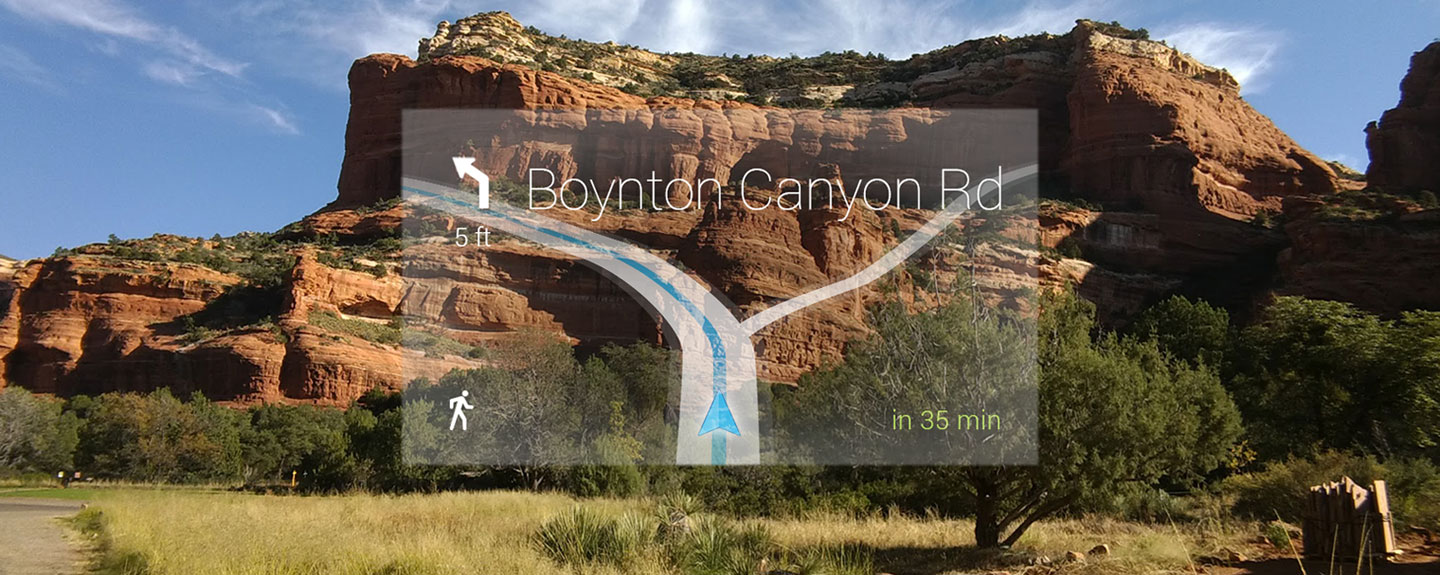
               show you directions


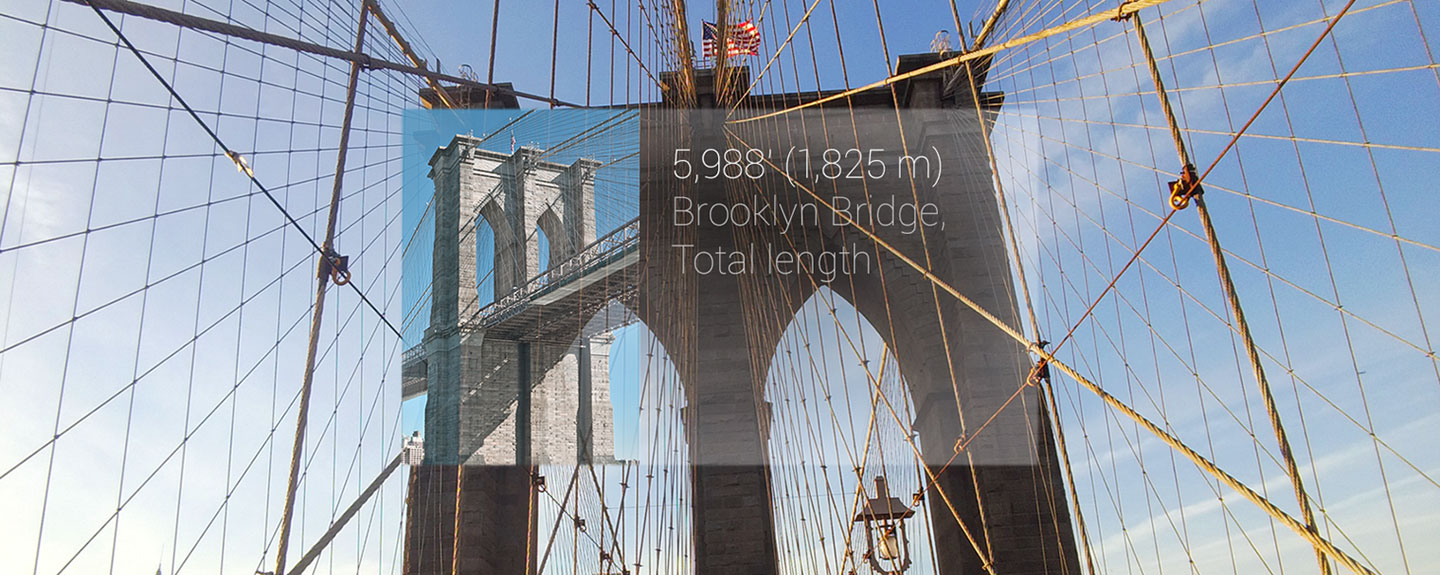
    Just ask whatever is in your mind

http://www.google.com/glass/start/assets/img/panels/bgs1440x575/messaging.jpg                                    

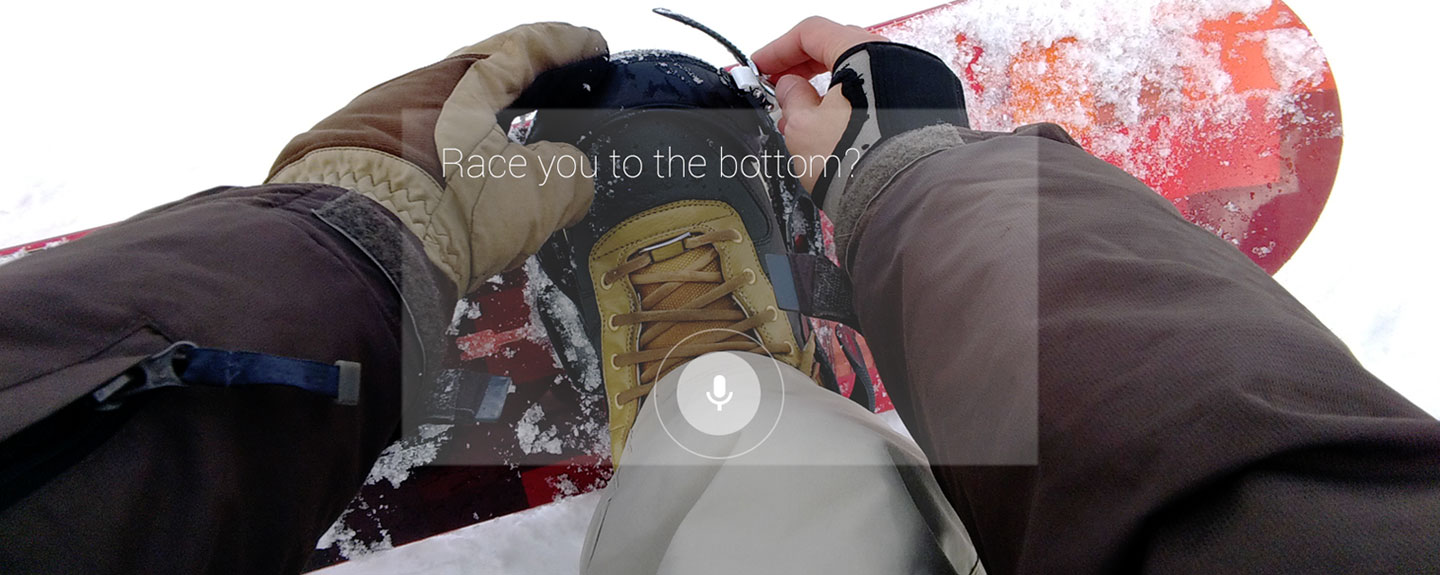
Text via speech


http://www.google.com/glass/start/assets/img/panels/bgs1440x575/hangout.jpg
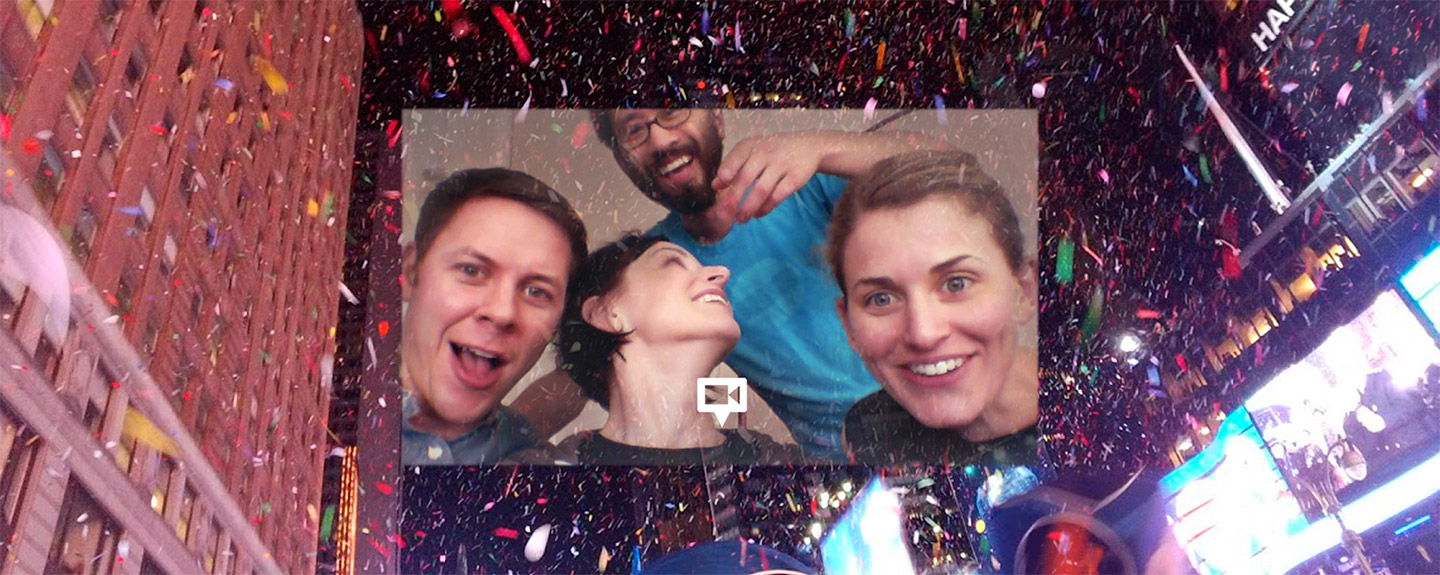
    Share what you see.Live   

And so many other coolest stuffs.

What's cool about technology is that it keeps on changing and you never know what craziest things the world will offer,but these Google Glasses will be totally off the hook;

I hope the CEO lands me one ....
Research from Google
                       http://www.google.com/glass/start/what-it-does/

Monday, 4 November 2013

The Future Motorcycles and Motorbikes

There is a saying that goes"A man is capable of his imaginations"And true if we can imagine it we can achieve it.Now I was looking at the craziest Future possibilities of advanced technologies and came out with this piece;

 The near future of motorcycles revolves around ones that run on hydrogen fuel cells, battery electric power and bio fuels. 


Future Motorcycle
Future Motorcycle

The Suzuki Crosscage fuel cell motorcycle (pictured above) is a hydrogen-powered prototype that exists now. Suzuki is putting the Crosscage through road testing with the goal of commercialization in less than 5 years.
Dodge Tomahawk
Dodge Tomahawk

So, let’s go back to the future a bit with this Dodge Tomahawk that was unveiled in 2003. Back then this was what the concept of future motorcycles would look like to the designers with its 500 hp Dodge Viper V10 engine. Even though this is a bit old school, it’s still too cool for school today.
Electric Motorcycle
Electric Motorcycle
Now, for new school, electric motorcycles are starting to come of age. For instance, this is the MotoCzysz E1pc, which is the world’s fastest electric motorbike. And no wonder due to the bank of batteries in the middle of the vehicle.
Motorcycle Concept
Motorcycle Concept

This is the A3W Motiv concept motorcycle by Julien Rondino. Besides the obvious three wheels in a row, it is made of aluminum and steel tubing plus a 999cc LC8 v-twin engine.

Wrath Motorcycle
Wrath Motorcycle
The Wrath concept by Alexander Barnard gives us a clue that future motorcycles 30 or so years from now can still go a bit old school with the chopper look.

Chopper Concept
Chopper Concept
Another future chopper concept motorcycle is the Swordfish by designer Alexander Kotlyarevsky. Style and power in one package. Can anyone say “road trip”?
Honda Future Motorcycle
The Honda Concept V4 motorcycle gives us an idea of what the future holds for this vehicle maker. By the time this hits the market, the term “Rice Burner” will have been long forgotten.
Tron Motorcycle
Tron Motorcycle
One day if we are all lucky enough we’ll be around to see future motorcycles such as this Tron light cycle prototype. My heart is racing now.

Research also from Future Motorcyles
Credits: Suzuki, Dodge, Alexander Barnard, Alexander Kotlyarevsky, Julien Rondino, Honda

And so we take a break from politics,I always say Africa is the craddle of next generation technology.I have imagined and so has Africa and we will build them.


Friday, 11 October 2013

"The ICC is not putting Africa on trial. The ICC is fighting impunity and individuals who are accused of crimes."Koffi Annan


The article is drawn from Former UN boss,The chair of the Africa Progress Panel  and Kenya  2007/08 Post Election Violence Mediator,Eminent Person Koffi Annan's speech and interview at One Young World summit in South Africa.


"I don't share the view that the ICC is anti-African," the 75-year-old Ghanian says firmly. "The ICC is not putting Africa on trial. The ICC is fighting impunity and individuals who are accused of crimes. We should also understand, and this point cannot be made strongly enough: of all the cases, four were referred to the ICC by African governments themselves. The two others, Libya and Darfur, were referred to the court by the security council."

He continues: "What is important is that African judicial systems are weak. The victims deserve justice and they want justice. When I travel around the continent, Africans want justice, preferably from their own governments if they can and, if not, from the international criminal court. The day when African courts become independent, strong and can handle these cases, I think we will see fewer referrals to the ICC.
"The question I cannot ask often enough is: who speaks for the victims? How do they get justice? Who's in their corner?"

These are burning questions in Kenya in particular, where those who suffered post-election violence more than five years ago are still waiting. But ICC trials of president Uhuru Kenyatta and his deputy William Ruto may become another victim of the last month's al-Shabaab killing spree in Nairobi's Westgate shopping mall. It was Kenya's worst terrorist attack for 15 years, but Annan says the response must come from far and wide.
"I think the al-Shabaab issue and the terrorism issue should not be seen as only a problem for Kenya. It is an international problem and governments and security forces have to share information and intelligence and work together to deprive the terrorists of the opportunities and constantly ensure that they are on the wrong foot.
 And My say....
The AU members who are threatening to withdraw from Rome Statute must do so with interest of its people and not few leaders who are protecting their own interest.AU must stop convincing us that ICC has colonised us yet its the poor leadership in AU that has colonised us.We must get independence from poor governance and Aristocratic leadership.

In an effort of pretenseby AU to save us from neocolonialism of ICC,they must'nt make us feel like we are colonised within ourselves.The leaders must first agree to let their Judiciaries be and promote international democracy and Justice,thats when they should call some taxpayer funded meeting to discuss walking out of ICC.

Research also from http://www.theguardian.com/world/2013/oct/10/kofi-annan-interview-icc-african-justice

Friday, 4 October 2013

The Flame of Freedom-A Sneak preview of Prime Minister Raila Odinga's to be Released Autobiography

You read this and you realise he is one in a billion;My hero Raila Amolo Odinga. 


As shackled as ever
He refers to Raila Odinga: An Enigma in Kenyan Politics, a book by Nigerian author Babafemi Badejo published seven years ago, and says that what was said about his role in the coup in that book touched off what he considers inordinate umbrage.
“The publication of a biography of me in 2006, where the writer intimated a peripheral role for me in the coup attempt, caused a vindictive outcry — indicating that freedom of speech is, at the time I tell this, my story, as shackled as ever in our country,” he writes.
He then narrates where he was and what he was doing on August 1, 1982, the morning of the coup attempt. He says he was at a friend’s house in Parklands from where he followed the updates broadcast on KBC (then Voice of Kenya) radio.
On August 11, he was picked up from Prof Oki Ooko Ombaka’s house in Caledonia, Nairobi, by officers led there by his driver, whom they had picked up at Mr Odinga’s house in Kileleshwa.
What followed were days of physical and psychological torture at the hands of the Special Branch in their offices on University Way, across the road from Central Police Station, and later at Muthangari Police Station, GSU and CID headquarters.
Mr Odinga recalls the torture meted out by an officer of the Special Branch named Josiah Kipkurui Rono and his team, who were determined to extract from him a confession of what he knew about the coup attempt.
Mr Odinga refused to give in.
He says his adamant position that he knew nothing about the coup attempt enraged Mr Rono, who broke off the leg of a wooden table and slammed it repeatedly on to Mr Odinga’s head and shoulders.
“The blows to my head dazed me and I fell to the floor, and as I lay there, Rono and the others jumped on my chest and my genitals.
Through the blinding pain, I heard them cock their guns, then Rono’s voice: I was either going to speak and tell the truth or I was dead meat. I waited for the end… But it did not come,” he writes.
The beating stopped and Mr Odinga was returned to the cells. For the next few days, he describes agonising torture — including jail in cold water-logged cells, at the hands of the Special Branch. He would attempt to sleep by leaning on the wall but soon the chilling cold — his sweater and shoes had been taken away — would awaken him.
“That is when I learned how long the night is,” he writes.
When he was later moved to the GSU headquarters, Mr Odinga would learn that he had been incarcerated with the dean of the faculty of Engineering at the University of Nairobi, Prof Alfred Otieno, and with Mr Otieno Mak’Onyango, then assistant managing editor of the Sunday Standard.
The interrogations continued and, to demonstrate the gravity of the matter, the then Commissioner of Police, Mr Ben Gethi, came in person to question Mr Odinga.
The author says that Mr Gethi appeared to have had too much to drink and was “disgustingly” chewing away on a roasted goat leg. He ordered the prisoner to write all he knew about the coup attempt.
Mr Odinga slowly wrote out a statement, drawn from a rumour he had heard implicating the then Attorney General, Charles Njonjo, in the coup attempt. An angry Mr Gethi, who was Mr Njonjo’s friend, tore up the statement and demanded another. When he realised that Mr Odinga’s story was not changing, he left.
In the dramatic fashion that characterised the Moi regime, Mr Gethi was sacked two days after that interrogation and was himself detained for 10 months.
Mr Odinga would write more statements in the hands of different interrogators, until six weeks later, when the State decided it was ready to proceed with the case against him and Prof Otieno and Mr Mak’Onyango.
The charges were served to their defence lawyers and the suspects were remanded in custody to await their trial and subsequent fate.
“Remand was a rude awakening,” writes Mr Odinga. The suspects were issued with uniforms that were old and torn, especially between the legs, as part of a psychological scheme to humiliate the suspects. Their diet consisted of no more than half-cooked ugali and what Mr Odinga describes as “vegetable water with a few limp leaves floating around”.
They were not allowed to see anyone or talk among themselves and the uniforms they wore had a big ‘C’ printed across the front, to indicate that they were charged with capital offences punishable by death.
They each stayed in solitary confinement in cells with hardly any sunlight and were issued with one blanket to sleep on and another with which to cover themselves. The lightbulb screwed into the ceiling high above burned 24 hours day.
They would be escorted twice a day to the toilets and back, individually so that they saw and spoke to no one. The warders spied on each other to ensure that no one helped the prisoners to break the rules.
The three men spent two weeks on remand before they were allowed to have a shower. “The fact that we were on remand and, under the law, presumed innocent, mattered not at all,” Mr Odinga writes.
He captures the humdrum tedium of life in remand, which he calls the “endless sameness of the daily routine”.
“We were continually counted to make sure we had not absconded – counting, counting, counting, all day long. It never ceased.”
Engaging in risky adventures, they designed ways of writing notes to their relatives on the outside, concealing them in their socks or under their tongues, or in other other ingenious ways, with anyone going outside for a court appearance being a contraband courier.
Smokers, writes Mr Odinga, went to extreme lengths to smuggle in cigarettes. He says that, from what he saw, had he been a smoker, he would have quit rather than practise such desperation.
After the warders had gone to their stations at night, the remandees would shout to inmates in neighbouring cells, and in this way Mr Odinga discovered that some of those locked up nearby were Kenya Air Force men who had been arrested over the coup attempt and who faced courts martial for treason.
These prisoners firmly believed in their action against dictatorship and corruption, and they were willing to die for it. Mr Odinga writes that many of them were sentenced to death and that “It was terrible – terrible and heart-breaking.
“They would be taken to court in the morning and would return in the afternoon to tell us quietly that they had been sentenced to death. A few were acquitted and a few imprisoned but many paid the ultimate price.”
Finally the day came in January 1983 for Mr Odinga to face 13 charges in relation to the abortive coup of August 1, 1982.
The trial was then delayed and postponed by the prosecution several times, while Mr Odinga’s relatives and friends worked to set up for him the best defence team they could.
The day of the trial was finally set for March 24, 1983.
The prosecution was led by lawyer Sharad Rao (now chairman of the Judges and Magistrates Vetting Board).
Suddenly, the day before the trial was due to begin, Mr Odinga and his two co-accused were asked to collect all their belongings from their jail cells. They were driven to the courts and taken before the then Chief Justice, Sir James Wicks.
Mr Rao announced that he had orders from the Attorney-General to enter a nolle prosequi – that the State no longer wished to prosecute the three.
What followed was dramatic. The three men were released and all the papers were signed, but police officers never left their sides, and as the three exited the court they were bundled into a waiting Special Branch vehicle. The thought of detention immediately crossed Mr Odinga’s mind.
They were driven via a roundabout route to Langata Police Station. At day’s end, they were taken to the Nairobi area police headquarters, where the then provincial police chief, Philip Kilonzo, served them with detention orders signed by then internal security minister, Justus Ole Tipis.
“We three detainees arrived at Kamiti about midnight, back where we had started the day – but now we had a new home: the isolation block, the detention camp, the prison within a prison. The next phase of the struggle had begun,” writes Mr Odinga.
He would remain in detention without trial, which was lawful at the time, until February 5, 1988, when he was dramatically released by President Moi.
He would survive the solitude by exercising when he could and reading numerous books that his wife Ida sent him (but which had first to be censored by the authorities). He writes that he extensively studied the Bible, the Koran and other religious material, in addition to numerous other types of books, any kind, he could lay his hands on.
He would also do some gardening in the prison plot when the authorities allowed, growing different vegetables. He would serve in Kamiti, Manyani, Naivasha and Shimo la Tewa prisons, all of which had gained brutish notoriety since colonial days.
Mr Odinga’s mother died while he was in detention and he would learn of this and of other deaths of relatives painfully, sometimes months after the event, and he would never be allowed out to attend their funerals, a grim testament to the torture meted out by the regime of the day."

The book is to be released on Sunday 6th October 2013.This is a must read for everyone.
Research also from;
http://mobile.nation.co.ke/News/-I-was-kicked-in-the-seat-of-my-pants-/-/1950946/2018326/-/format/xhtml/-/152n6qb/-/index.html

Wednesday, 2 October 2013

ICC WARRANT OF ARREST FOR KENYAN JOURNALIST WALTER BARASA SHOWS FAILURE OF OUR JUDICIARY AND SERIOUSNESS IN RUTO CASE;

International Criminal Court has issued warrant of arrest against Kenyan Walter Barasa for attempting to ICC witnesses.
corruptly influence
Pre-Trial Chamber II of the International Criminal Court ( ICC) unsealed an arrest warrant against Walter Osapiri Barasa, Kenyan citizen, born in 1972.
"He is charged with several offences against the administration of justice including corruptly influencing or attempting to corruptly influence ICC witnesses. An under seal warrant of arrest was issued against him on 2 August 2013. This is the first case before the ICC where a suspect is charged with an offence against the administration of justice, in accordance with article 70 of the Rome Statute," the court said in a statement.


Judge Cuno Tarfusser, Single Judge of Pre-Trial Chamber II, considered that the evidence presented by the Prosecutor established reasonable grounds to believe that Walter Barasa is criminally responsible as direct perpetrator for the crime of corruptly influencing or, alternatively, attempting to corruptly influence witnesses by offering to pay them to withdraw as ICC Prosecution witnesses in the context of the Kenyan cases before the ICC.
Allegedly, he has been and is still acting in furtherance of a criminal scheme devised by a circle of officials within the Kenyan administration.
Based on the Prosecutor’s evidence, Judge Tarfusser also found that it is necessary to arrest Walter Osapiri Barasa to ensure his appearance at trial, to ensure that he does not obstruct or endanger the investigation or the proceedings, and to prevent him from continuing with the commission of the crime.

 The new development has further proved there hasn't been an effort by the Judiciary in trying to punish perpetrators and Obstructors of Justice within the country.How is Judiciary collaborating with ICC to ensure Justice is delivered.This is another failure of Mutunga's Judicial body.

Personally,this development gives me optimism of not hearing of more witness withdrawals and a final justice will be granted to the victims of 2007/2008 post election violence.This coming when Ruto's trial is going on at the Hague is of great importance since I believe most witnesses who have been seduced by Journalist Barasa have been against him.

I fully support the ICC in its quest of Justice and if Journalist Barasa is found guilty,then he must be punished in accordance to the rule of law.He must answer why he doesn't seek justice for 1500 people who died during the POV.

Research also from http://www.standardmedia.co.ke/?articleID=2000094751&story_title=icc-issues-arrest-warrant-for-walter-barasa.

FPL GAMEWEEK 27

I currently rank 175k a drop from the 145k rank on Gameweek 25. I owe my drop to captaining Aguero who gave me a return of 4 versus 28 by ...